
Four or More Passes in 12 Seconds or Less
The Statistical Sweet Spot Most Coaches Miss
Nate Davis
5/11/20266 min read

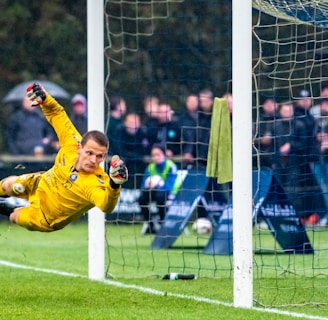
Many soccer coaches imagine a romanticized version of the "Beautiful Game." They envision a team that dominates the ball, stringing together twenty passes in a hypnotic web until the opponent is lured out of position and the goal is practically walked into the net. They have seen the Instagram highlight of an elite European giant stringing a long passing possession together, but that’s not reality. It isn’t even reality for those great teams.
To score consistently, coaches must shift their primary question from “How do we keep the ball?” to “How quickly can we threaten the defense?”
_________________________________
"If you can play a ball forward, you must play it forward. If you don't play it forward, you give the opponent time to organize."
Arne Slot
"You have to look for the striker as soon as you win the ball. If you wait, the gap is gone."
Thierry Henry
_________________________________
When a team gets a fast break, players know how to take advantage of the chaos. They aren’t going to slow the play down. They are going to attack. The issue is with controlled possessions, and the data is clear and perhaps surprising. There is a "Goldilocks Zone" where the probability of scoring peaks and then falls off quickly. That window is only about 12 seconds long. Success in the modern game must respect that window.
The Data Behind 12 Seconds
Research indicates that in possessions where a team has established clear control, the highest concentration of goals occurs when 4 or more passes are completed within about 12 seconds. If you haven't generated a shot by second thirteen, you are no longer playing against a disorganized opponent; you are playing against a set wall. At that point, your statistical chances of scoring begin to plummet --- something like 20% for every additional five seconds the ball stays in your possession.
People have studied these things:
Taha & Ali (2023) demonstrated through regression models that the log odds of scoring increase with each successful pass but decrease with longer possession duration.
Eusebio et al. (2025) analyzed offensive transitions across top, marginal, and emerging leagues and showed how critical timing and duration are to success.
Cao et al. (2024) found that longer attacking sequences were negatively associated with shooting effectiveness.
The Passing Paradox
The models show that, while the odds of scoring a goal decrease as the clock ticks, they actually increase with every completed pass within that timeframe. The goal is high-pass density, provided those passes progress toward the goal. The ideal is 4 or more passes in about 12 seconds. This creates a paradox. Time is your enemy, but higher pass counts are your ally.
In practice, this means aggressive, hierarchical decision-making. A player’s first instinct upon receiving the ball should be to make the most attacking pass available. Look to the forward first. If they are open enough to receive or have an isolated 1v1 with a defender, that is the priority. If that situation isn't available, look to the midfield. Only if the forward and midfield options are closed should the ball move back to the defense. The ball should not go from defender to defender if a forward player is available. By constantly hunting the most vertical option, you minimize the slow, lateral touches that burn through your 12-second window without threatening the goal.
_________________________________
"The first thing I do when I get the ball is look for the furthest player forward. If he’s there, he gets it. If not, I look for the next one."
Kevin De Bruyne
"I always looked for the shortest way to the goal. You have to pass the ball where the space is going to be, and that is usually forward."
Pelé
_________________________________
While the research may not pin down an exact universal cutoff of 4 plus passes in 12 seconds, the overall body of evidence consistently points coaches toward the same practical conclusion: combining higher pass counts with short, urgent possessions improves outcomes, especially at non-elite levels. Whether the statistical sweet spot sits at 11, 13, or 15 seconds matters less than the broader truth that urgency and purposeful forward movement are rewarded, and every extra second spent recycling the ball without progressing the attack works against you.
Why These Statistics Make Sense
It takes roughly 10 to 12 seconds for a defense to recover its lines after a shift in possession or a penetrative move. When a team plays the ball backward to a defender, they are effectively granting the opposition time to recover their shape, reorganize their lines, and reset into a compact defensive block. This is the first factor that explains why 4 plus passes in 12 seconds is most effective.
A second critical factor is the sharp rise in the likelihood of technical and decision-making errors over time. At collegiate and emerging professional levels, even well-trained players experience declining composure under sustained pressure. The longer the possession, the higher the probability of a misplaced touch, a telegraphed pass, or a forced error that ends the attack.
Finally, there is the dangerous mindset cultivated by slow, patient build-up. Players are trained to wait for the perfect opportunity, and that may make them more likely to reject high-value progressive options. This hesitation kills attacking momentum.
Together, these elements explain why possessions that stretch beyond the 10–12 second window with insufficient pass density see their goal probability plummet. The defense has reset, technical risk has compounded, and attacking intent has been diluted. Aggressive decisions and high-pass density within that critical timeframe counters all three problems at once.
Are You Open to a Change?
Accepting a 12-second ceiling on your team's best scoring chances may trigger emotional resistance. Change may challenge a coach's identity. As coaches, it is important to acknowledge that our job isn’t to protect our own identity, but to help players succeed.
_________________________________
"The most important thing in soccer is to score goals. If you have the ball and you don't score, it doesn't mean anything."
Pelé
_________________________________
Moving past this emotional hurdle allows for a shift in focus toward the high-speed, high-density play required to exploit the defense before the window snaps shut. It doesn't eliminate other forms of play. It merely teaches players to prioritize the one that will give them the best results in the long run.
Visualizing the Math
Players need to think and play in 12-second increments for a high-probability attack. You can train this cognitive clock by having them close their eyes and imagine where the ball travels across the full pitch as you count the 12 seconds aloud. During this time, have them create a mental image of what an ideal scoring sequence looks like, visualizing the four to seven sharp, mostly-vertical passes that slice through a recovering defense. Next, have them imagine that the team is forced to reset, and have them "recount" the 12 seconds as they begin to attack again. Finally, have players count to 12 as they watch a game from the sideline or on TV. They will see that once they hit ten, eleven, or twelve, the defensive windows begin to vanish, and the statistical likelihood of a goal begins to fall.
Practice to Compete
For good reason, I unapologetically encourage that every player at every level get 1,000 challenging touches at every practice. Each player must be ready to trap, evade, and pass without fault, always pushing the attack and not retreating because they don’t have confidence in their own skill. Each player must have the technical mastery required to ignore the safe, lateral option and instead hunt the pass that beats the math.
Small-sided games (4v4) can develop the skill, confidence, and decision-making required to attack quickly and effectively. When we break it down, soccer is a 4v4 contest that moves to a different part of the field where a new 4v4 contest begins. Rarely are there more or fewer players involved in the activity around the ball.
Particularly effective for 4 or more passes in 12 seconds is the 4v4 endzone game, where teams score by receiving the ball in an endzone. This simulates moving the ball out of a compressed area into a new space on the pitch or to a player behind the defense.
Adding a shot clock to a small-sided game can increase urgency.
Ready for More Wins?
The beautiful game, at most levels, is not slow and hypnotic. It is fast, vertical, and decisive. It is mostly fast, purposeful, and decisive. Teams that internalize 4 or more passes in 12 seconds or less will create more dangerous opportunities than those wedded to prolonged possession. Applying high-attack, high-density passing to as many possessions as possible will yield the best results over time.
References
Cao, S., et al. (2024). Passing path predicts shooting outcome in football. Scientific Reports, 14, 9572. https://doi.org/10.1038/s41598-024-60183-7
Eusebio, P., Prieto-González, P., & Marcelino, R. (2025). Duration, score, and timing: Factors influencing the success of offensive transitions in top, marginal, and emerging football leagues. Frontiers in Sports and Active Living, 6, 1462932. https://doi.org/10.3389/fspor.2024.1462932
Taha, T., & Ali, A. Y. (2023). Greater numbers of passes and shorter possession durations result in increased likelihood of goals in 2010 to 2018 World Cup Champions. PLOS ONE, 18(1), e0280030. https://doi.org/10.1371/journal.pone.0280030
Contact
Questions or thoughts? Reach out anytime.
© 2025. All rights reserved.